HORIZON EUROPE SPADES

Soil health is a cornerstone of sustainable ecosystems, yet it is under unprecedented pressure from climate change, urbanisation and land degradation. The EU-funded Horizon Europe SPADES project will address these challenges by integrating soil health into spatial planning and design. Our mission is clear: to support Europe’s transition to healthy soils by empowering policy makers, practitioners and communities. By promoting soil literacy and creating adaptable tools, SPADES is putting soil health is at the heart of planning for the benefit of current and future generations.
Horizon Europe UP2030

UP2030 aims to guide cities through the socio-technical transitions required to meet their climate neutrality ambitions. It will do so by enabling a quantum leap from a ́business as usual ́, project-by-project decarbonisation approach to a vision-driven, strategy-based approach that is anchored on sound projects and renewed policy development. The approach uses urban planning and design as a vehicle to create better connected, more compact, net-zero neighbourhoods in the city pilots – i.e. neighbourhoods that promote liveability and, through designing with intent, promote mitigation action. The TU Delft team’s role is to work on up-skilling the pilot cities’ stakeholder ecosystem to engage them in transitions towards carbon-neutral futures.
FIND OUT MORE
Horizon Europe DUST

Democratising jUst Sustainability Transitions (DUST) project develops and operationalises novel participatory instruments for proactive and strategic citizen engagement in sustainability transitions. It combines design-led territorial tools with digital tools for citizen deliberation at scale. The project addresses a defining societal and democratic challenge for Europe, which is to hear the voices of least engaged communities, especially in structurally weak regions dependent on energy- intensive industries, which will be most affected by transitions towards a more sustainable future. Our team at TU Delft leads the project.
ESPON senpo
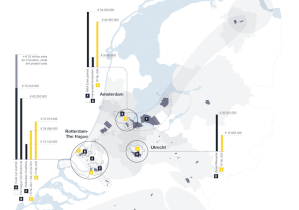
SENPO stands for ‘Territorial instruments of national policies as a tool for designing territorially sensitive policies’. This ESPON project aims to examine and benchmark territorial instruments which are used by national public policies in Europe to intervene in areas undergoing socio-economic transition, by drawing on 5 case studies: the Polish Areas of Strategic Interventions (OSI), the Dutch NOVEX programme, the German Metropolitan Regions policy, the Italian Strategy for Inner Areas (SNAI), and the French CPER (contrats de plan État-Régions).
Selected past projects
Interreg Europe WaVE
WaVE stands for Water-linked heritage Valorization by developing an Ecosystemic approach. The project aims to improve existing policy instruments across five European locations for integrated valorisation approaches of cultural heritage, to sparkle ideas for the creation of new projects, and to raise awareness for the subject at other cities and regions in Europe. I lead the TU Delft project team. Our role is that of a knowledge partner, providing methodologies for knowledge transfer, co-creative stakeholder engagement and development of action plans, feedback and advice to the five cities and regions involved.
ESPON COMPASS and its spin off
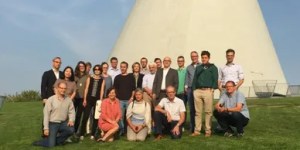
COMPASS (Comparative Analysis of Territorial Governance and Spatial Planning Systems in Europe) investigated the changes in territorial governance and spatial planning systems and policies across Europe. In particular, the project investigated whether and how EU directives and policies influenced those changes and identified potential for cross-fertilisation between EU Cohesion Policy and spatial planning. ESPON COMPASS Spin Off project (2020-2021) explores further the scope for this cross-fertilisation in a dialogue with practitioners and experts from 32 European countries.
Selected output:
- Nadin, V., Stead, D., Dąbrowski, M., Fernandez Maldonado, A.M. (2020) Integrated, adaptive and participatory spatial planning: trends across Europe
Horizon2020 REPAiR
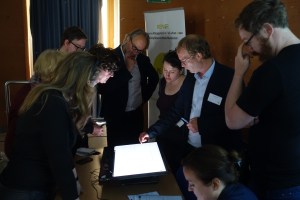
REPAiR focused on how the design of physical structures and their social and urban metabolisms, including health, economy, well-being and happiness, are affected by material flows and their environmental impacts. In other words, the project explored the spatial, social, metabolic, and governance dimensions of circular economy.
Selected outputs:
- Dąbrowski, M., Varju, V., Amenta, L. (2019) Transferring Circular Economy Solutions across Differentiated Territories: Understanding and Overcoming the Barriers for Knowledge Transfer
- Obersteg, A., Arlati, A., Acke, A., Berruti, G., Czapiewski, K., Dąbrowski, et al. (2019) Urban Regions Shifting to Circular Economy: Understanding Challenges for New Ways of Governance
Horizon2020 COHESIFY
COHESIFY investigated whether and how EU Cohesion Policy spending in differentiated European regions affects the ways in which the citizens of those regions perceive and identify with the European Union. I lead the TU Delft team focusing on the role of governance, the regional determinants of EU image among citizens and the Dutch case study.
Selected outputs:
- Dąbrowski, M., Spaans, M., Fernandez-Maldonado, A. M., Rocco, R. (2020) Cohesion Policy and the citizens’ perceptions of the EU: the role of communication and implementation
- Dąbrowski, M., Stead, D., & Mashhoodi, B. (2019) EU Cohesion Policy can’t buy me love? Exploring the regional determinants of EU image
Urban Studies Foundation Post-doctoral Research Fellowship: Responding to Climate Change Challenges

Post-doctoral research project, supported by a prestigious individual grant from the USF. The research explored the governance challenges that integration of spatial planning and flood risk management in cities and urban regions brings. It focused on the South Wing of the Randstad in the Netherlands and the cities of the Pearl River Delta, namely Guangzhou, Shenzhen and Hong Kong. A video summary can be seen here.
Selected outputs:
- Dąbrowski, M., Stead, D., He, J., & Yu, F. (2021). Adaptive capacity of the Pearl River Delta cities in the face of the growing flood risk: Institutions, ideas and interests
- Dąbrowski, M. (2018) Boundary Spanning for Governance of Climate Change Adaptation in Cities: Insights from a Dutch Urban Region
- Francesch-Huidobro, M., Dąbrowski, M., Tai, Y., Chan, F., Stead, D. (2017) Governance challenges of flood-prone delta cities: Integrating flood risk management and climate change in spatial planning
Energy and Cohesion: Governance, Regulations and Negotiations

Investigation of the governance and acceptance challenges concerning wind turbines and biomass energy production across European regions. Project led by CNRS CERI (Sciences Po, Paris), funded by the French Agence Nationale de Recherche.
Selected outputs:
- Dąbrowski, M. (2016). Chapitre 2 / Pays-bas : La province de Hollande-septentrionale. In F. Bafoil (ed.) L’énergie éolienne en Europe, Paris: Presses de Sciences Po, pp. 65-96.
ESPON Financial Instruments and Territorial Cohesion

The project entailed a territorial analysis on the impacts of European Structural and Investment Funds’ financial instruments as part of EU Cohesion Policy. My role was to conduct a case study in Wielkopolskie region, Poland.
Selected outputs:
- Dąbrowski, M. (2019) Financial Instruments and Territorial Cohesion Wielkopolskie region, Poland. Case Study Report
List of all projects and research grants:
- Horizon Europe Spatial Planning and Design with Soils (SPADES), leader: Deltares (2024-2026);
- Horizon Europe Democratising jUst Sustainability Transitions (DUST),* leader: TU Delft (2023-2025);
- Horizon Europe Urban Planning & design ready for 2030 (UP2030), leader: Fraunhofer Institute (2023-2025);
- Ex-Post Evaluation of the European Union’s Territorial Instruments (TERREX),** leader: EPRC, University of Strathclyde (2022-2024);
- ESPON COMPASS Spin-off Cross-Fertilisation of Cohesion Policy and Spatial Planning, leader: TU Delft (E2020-2021);
- INTERREG EUROPE WaVE,** leader: Gemeente Breda (2019-2023);
- ESPON IRiE, leader: NASUVINSA (2020-2022);
- ESPON Financial Instruments and Territorial Cohesion, leader: University of Strathclyde (2017-2019);
- ESPON COMPASS,* leader: TU Delft (2016-2018);
- H2020 REPAiR,* leader: TU Delft (2016-2020);
- H2020 COHESIFY,** leader: University of Strathclyde, (2016-2018);
- Open Project Program of the State Key Lab, South China University of Technology, personal grant (2014-2015);
- Urban Studies Foundation Postdoctoral Research Fellowship,* personal grant (2013-2016);
- Urban Knowledge Network Asia (Marie Curie Actions) personal grant (2014-2015);
- Eolien et biomasse énergie: représentations, action collective et acceptabilité sociale en en France, Allemagne, Grande-Bretagne, Grèce, Pays-Bas, Pologne, Agence Nationale de Recherche, ANR-11-IDEX-0005-02, leader : CERI Sciences Po (2014-2015);
- RSA Early Career Grant – personal grant (2012-2013);
- UACES Scholarship for PhD research (2008).
* – leadership or membership of the core-writing team for the funding bid. ** – leadership of the TU Delft project team.
 Marcin Dąbrowski