
My publications’ topics reflect my evolving research interest over time. I published extensively on EU Cohesion Policy and its governance, adaptation to climate change in cities, with a focus on the nexus between spatial planning and flood risk management, more recently also on spatial justice, circular economy and spatial planning systems. Please follow the links below to access the papers. Most of my publications from the recent years are open access. You can find them below, via Scholar or TU Delft’s PURE portal.
- Highlights
- Peer-reviewed papers
- Books
- Book chapters
- Selected research reports
- Practice-oriented publications
- Other
Highlights
Going Circular: Unlocking the Potential of Regions and Cities to Drive the Circular Economy Transition
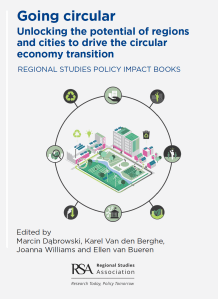
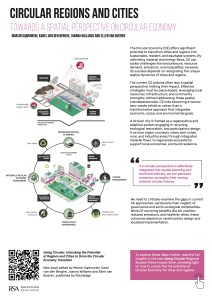
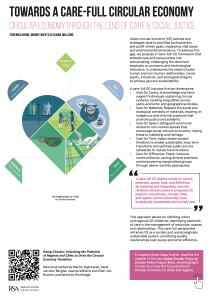
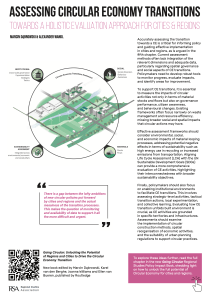
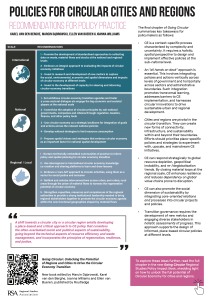
This edited book adds to the growing literature on the spatial dimension of circular economy and underscores the role of urban and regional authorities in it. We highlight the importance of integrating social, ecological, and economic dimensions into spatial circular economy strategies. In a nutshell, the book’s six chapters systematically address – in a clear and visual language – pivotal issues related to circular economy transitions in cities and regions, from the need for a more place-based approach to circular economy, through geopolitics, inclusion, regional regenerative approaches, to assessment of circular economy transitions. Please see infographics summarising the main messages of the book below.


Teaching, Learning & Researching Spatial Planning
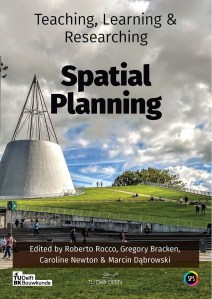
The edited book introduces how spatial planning is taught, researched and practiced at TU Delft. In most places, spatial planning is part of an architectural approach to the city, in which design exists almost autonomously, while in other places it is part of a political-economical approach to the city. What distinguishes the ‘Delft approach’ to planning is the connection between design and politics, and the way we understand space as foundational for the understanding of socio-economic processes. This is anchored on a Dutch tradition of city-making in which issues of “maakbaarheid” (roughly translated by “feasibility”), a guiding concept in Dutch society, which was built upon an exceedingly difficult territory to plan, design and manage. Spatial planning in the Netherlands is hence a combination of planning, design and management that is unique. Simultaneously, spatial planning as a discipline in the Netherlands is forward-thinking and uniquely equipped to deal with the great societal challenges of our time (climate change, pandemics, growing inequality, etc). Each chapter in this book addresses issues that we see as central to the way of teaching and researching spatial planning.
Boundary spanning for governance of climate change adaptation in cities

Adapting to climate change in the urban setting requires cooperation across scales, levels of government, organisational boundaries and policy sectors. The paper explores governance of urban adaptation policies through the conceptual lens of multi-level governance and boundary spanning. Building on the case of the South Wing of the Randstad urban region (The Netherlands), the paper investigates how the features of the wider institutional context shape the governance of urban adaptation policies and how the contextual factors constrain the scope for spanning horizontal, vertical and temporal boundaries needed for delivering those policies and making the cities more climate-proof.
Integrated, adaptive and participatory spatial planning
Whether spatial planning systems are equipped to cope with contemporary regional and urban challenges is strongly dependent on their capacity to promote integration between policy sectors, to respond adaptively to changing societal and political conditions, and to involve and engage citizens in decision-making processes. This paper examines and compares how these capacities have evolved in European countries since the start of the 21st century. The findings indicate that many countries have made reforms to spatial planning with significant implications for their capacity to promote integrated, adaptive and collective planning decisions.
Peer-reviewed papers
- Lin, X., Dąbrowski, M., Qu, L., Hausleitner, B., & Rocco, R. (2025). Urban Regeneration Through Circularity: Exploring the Potential of Circular Development in the Urban Villages of Chengdu, China. Land, 14(3), 655. https://doi.org/10.3390/land14030655
- Cardoso, R., Uyttebrouck, C., & Dąbrowski, M. (2025). From strugglers to superstars: assessing the roles of European regions in knowledge flows. Regional Studies, https://doi.org/10.1080/00343404.2025.2451307
- Maier, K., Kabrhel, J., & Dąbrowski, M. (2024) Crossfertilisation between spatial planning and territorial cohesion: lessons from the Czech Republic, Planning Practice & Research, 40(1), 143-163. https://doi.org/10.1080/02697459.2024.2416352
- Liu, K. T., Dąbrowski, M. (2024). Towards Just and Integrated Energy Transition in Taiwan: A Socio-Spatial Perspective. Land. 13(7):916. https://www.mdpi.com/2073-445X/13/7/916
- Nadin, V., Fernández-Maldonado, A.M., Dąbrowski, M., Stead, D. (2024), Reform of European spatial planning systems: integration, adaptation and participation. In Nadin, V., Cotella, G., Schmitt, P. (Eds.), Spatial Planning Systems in Europe. Comparison and Trajectories, Cheltenham and Northampton, M.A.: Edward Elgar, pp.148-171. https://doi.org/10.4337/9781839106255.00018
- Wandl, A., Dąbrowski, M., Berruti, G., Acke, A., Obersteg, A., Varjú, V., Taelman, S. E., Arlati, A., Grodzicka-Kowalczyk, M., Kowalczyk, M. (2023) A Holistic Self-Assessment Tool for Circular Economy Transitions in Cities and Regions, Europa XXI, 44, 15-35. https://doi.org/10.7.7163/Eu21.2023.44.10
- Blanc, F., Cotella, G., & Dąbrowski, M. (2023). Spatial governance and planning policy transfer in the Global South. The role of international agency and the recirculation of policies. Planning Practice & Research, 38(6), 749-762. https://doi.org/10.1080/02697459.2023.2275422
- Yu, H. C., Lin, T. H., & Dąbrowski, M. (2023). Beyond Conditionality: Community Placemaking in Taiwanese Social Housing Management, Planning Practice & Research, 38:1, 43-61, https://doi.org/10.1080/02697459.2022.2079804
- Fernandez Maldonado, A. M., Dąbrowski, M., Piskorek, K., Van den Toorn Vrijthoff, W. (2023) Water-Linked Heritage as a Vector of Ecosystemic Change in Cities and Regions. Blue Papers, 1(2), 78-89, https://doi.org/10.58981/bluepapers.2022.2.08
- Meng, M., Dąbrowski, M., & Stead, D. (2023). Governing Resilience Planning: Organizational Structures, Institutional Rules, and Fiscal Incentives in Guangzhou. Land, 12(2). https://doi.org/10.3390/land12020417
- Meng, M., Dąbrowski, M., Xiong, L., & Stead, D. (2022). Spatial planning in the face of flood risk: Between inertia and transition. Cities. https://doi.org/10.1016/j.cities.2022.103702
- Tajuddin, N., & Dąbrowski, M. (2021). Enabling Socio-Ecological Resilience in the Global South: Insights from Chennai, India. Sustainability, 13(19), 10522. https://doi.org/10.3390/su131910522
- Dąbrowski, M., Stead, D., He, J., & Yu, F. (2021). Adaptive capacity of the Pearl River Delta cities in the face of the growing flood risk: Institutions, ideas and interests. Urban Studies, 58(13), 2683- 2702. https://doi.org/10.1177/0042098020951471
- Nadin, V., Stead, D., Dąbrowski, M., Fernandez Maldonado, A.M. (2021) Integrated, adaptive and participatory spatial planning: trends across Europe, Regional Studies, 55(5), 791-803. https://doi.org/10.1080/00343404.2020.1817363
- Dąbrowski, M., Spaans, M., Fernandez-Maldonado, A. M., Rocco, R. (2021) Cohesion Policy and the citizens’ perceptions of the EU: the role of communication and implementation, European Planning Studies, 29(5), 827-843.
- https://doi.org/10.1080/09654313.2020.1805413
- Heurkens, E., & Dąbrowski, M. & (2020). Circling the square: Governance of the circular economy transition in the Amsterdam metropolitan area. European Spatial Research and Policy, 27(2), 11-31. https://doi.org/10.18778/1231-1952.27.2.02
- Muñoz Unceta, P., Hausleitner, B., Dąbrowski, M. (2020), Socio-Spatial Segregation and the Spatial Structure of ‘Ordinary’ Activities in the Global South, Urban Planning, 5(3). http://dx.doi.org/10.17645/up.v5i3.3047
- Meng, M., Dąbrowski, M., Stead, D., (2020). Shifts in Spatial Plans for Flood Resilience and Climate Adaptation: Examining Planning Procedure and Planning Mandates. Sustainability 2020, 12(1), 105. https://doi.org/10.3390/su12010105
- Dąbrowski, M., Varju, V., Amenta, L. (2019). Transferring Circular Economy Solutions across Differentiated Territories: Understanding and Overcoming the Barriers for Knowledge Transfer. Urban Planning, 4(3). www.cogitatiopress.com/urbanplanning/article/view/2162
- Arciniegas, G., Šileryté, S., Dąbrowski, M., Wandl, A., Dukai, B., Bohnet, M., Gutsche, J. (2019) A Geodesign Decision Support Environment for Integrating Management of Resource Flows in Spatial Planning. Urban Planning, 4(3). www.cogitatiopress.com/urbanplanning/article/view/2173
- Obersteg, A., Arlati, A., Acke, A., Berruti, G., Czapiewski, K., Dąbrowski, M., Heurkens, E., Mezei, C., Palestino, M. F., Varjú, V., Wójcik, M., Knieling, J. (2019) Urban Regions Shifting to Circular Economy: Understanding Challenges for New Ways of Governance. Urban Planning, 4(3). www.cogitatiopress.com/urbanplanning/article/view/2158
- Meng, M., Dąbrowski, M., Tai, Y., Stead, D., Chan, F. (2019) Collaborative Spatial Planning in the Face of Flood Risk in Delta Cities: A Policy Framing Perspective. Environmental Science & Policy, 96, 95-104. https://doi.org/10.1016/j.envsci.2019.03.006
- Dąbrowski, M., Stead, D., & Mashhoodi, B. (2019). EU Cohesion Policy can’t buy me love? Exploring the regional determinants of EU image. Regional Science Policy & Practice, 11(4), 695-711. https://doi.org/10.1111/rsp3.12237
- Smętkowski, M., & Dąbrowski, M. (2019). Economic crisis, Cohesion Policy and the eroding image of the European Union at the regional level. Regional Science Policy & Practice, 11(4), 713-732. https://doi.org/10.1111/rsp3.12238
- Dąbrowski, M. (2018) Boundary Spanning for Governance of Climate Change Adaptation in Cities: Insights from a Dutch Urban Region, Environment and Planning C: Politics & Space, 36(5), 837-855. https://doi.org/10.1177/2399654417725077
- Dąbrowski, M., & Piskorek, K. (2018). The development of strategic spatial planning in Central and Eastern Europe: between path dependence, European influence, and domestic politics. Planning Perspectives, 33(4), 571-589. https://doi.org/10.1080/02665433.2018.1513373
- Dąbrowski, M., & Lingua, V. (2018). Introduction: historical institutionalist perspectives on European spatial planning. Planning Perspectives, 33(4), 499-505. https://doi.org/10.1080/02665433.2018.1513374 (special issue introduction)
- Chan, F. K. S., Joon, C. C., Ziegler, A. D., Dąbrowski, M., & Varis, O. (2018). Towards resilient flood risk management for Asian coastal cities: lessons learned from Hong Kong and Singapore. Journal of Cleaner Production, 187, pp. 576-589. https://doi.org/10.1016/j.jclepro.2018.03.217
- Dąbrowski, M., Musiałkowska, I., Polverari, L. (2018). Introduction: drawing lessons from international policy transfer initiatives in regional and urban development and spatial planning, Regional Studies, 52(9), pp. 1165-1168. https://doi.org/10.1080/00343404.2018.1462490
- Dąbrowski, M., Musiałkowska, I., Polverari, L. (2018) EU–China and EU–Brazil policy transfer in regional policy, Regional Studies, 52(9), pp. 1169-1180. https://doi.org/10.1080/00343404.2018.1431389
- Baun, M., Marek, D., Dąbrowski, M. (2017) The challenge of implementing EU Environmental Law in the New Member States: The Urban Waste Water Treatment Directive in the Czech Republic and Poland. Environment and Planning C: Politics and Space, 35(6), 1117-1135. https://doi.org/10.1177/0263774X16686071
- Francesch-Huidobro, M., Dąbrowski, M., Tai, Y., Chan, F., Stead, D. (2017) Governance challenges of flood-prone delta cities: Integrating flood risk management and climate change in spatial planning. Progress in Planning, 114, pp. 1-27. https://doi.org/10.1016/j.progress.2015.11.001
- Dąbrowski, M. (2015). ‘Doing more with less’ or ‘doing less with less’? Assessing EU cohesion policy’s financial instruments for urban development, Regional Studies, Regional Science, 2(1), pp. 73-96. https://doi.org/10.1080/21681376.2014.999107
- Dąbrowski, M. (2014). Engineering Multilevel Governance? Joint European Support for Sustainable Investment in City Areas (JESSICA) and the Involvement of Private and Financial Actors in Urban Development Policy, Regional Studies, 48(12), pp. 2006-2019. https://doi.org/10.1080/00343404.2014.914625
- Dąbrowski, M. (2014). Towards place-based regional and local development strategies in Central and Eastern Europe? EU cohesion policy and strategic planning capacity at the sub-national level, Local Economy, 29(4-5), pp. 378-393. https://doi.org/10.1177/0269094214535715
- Dąbrowski, M., Bachtler, J., Bafoil, F. (2014). Challenges of multi-level governance and partnership: drawing lessons from European Union cohesion policy, European Urban and Regional Studies, 21(4), pp. 355-363. https://doi.org/10.1177/0969776414533020
- Dąbrowski, M. (2014). EU cohesion policy, horizontal partnership and the patterns of sub-national governance: insights from Central and Eastern Europe. European Urban and Regional Studies, 21(4), pp. 364-383. https://doi.org/10.1177/0969776413481983
- Dąbrowski, M. (2013). Europeanizing sub-national governance: partnership in the implementation of EU Structural Funds in Poland. Regional Studies, 47(8), pp. 1363-1374. https://doi.org/10.1080/00343404.2011.628931 (winner of the RSA Routledge Early Career Award).
- Dąbrowski, M. (2012). Shallow or deep Europeanisation? The uneven impact of EU cohesion policy on the regional and local authorities in Poland, Environment and Planning C: Government and Policy, 30(4), pp. 730- 745. https://doi.org/10.1068/c1164r
- Dąbrowski, M. (2008). Structural Funds as a driver for institutional change in Poland, Europe-Asia Studies, 60(2), pp. 227-248. https://doi.org/10.1080/09668130701820101
Books
- Dąbrowski, M., van den Berghe, K., Williams, J., van Bueren, E., Eds. (2024). Going Circular: Unlocking the Potential of Regions and Cities to Drive the Circular Economy Transition. London: Routledge (Policy Impact Book Series). https://www.tandfonline.com/toc/rpim20/6/1
- Rocco, R., Bracken, G., Newton, C., & Dąbrowski, M. Eds. (2022), Teaching, Learning & Researching Spatial Planning. TU Delft Open, https://doi.org/10.34641/mg.50
Book chapters
- Dąbrowski, M., Williams, J., Van den Berghe, K., & Van Bueren, E. (2024). 1. Circular regions and cities: towards a spatial perspective on circular economy. Regional Studies Policy Impact Books, 6(1), 13–28. https://doi.org/10.1080/2578711X.2024.2418227
- Van den Berghe, K., & Dąbrowski, M. (2024). 2. The window of opportunity for circular economy in Europe in the wake of the geopolitical turmoil: connecting scales and principles. Regional Studies Policy Impact Books, 6(1), 29–42. https://doi.org/10.1080/2578711X.2024.2418228
- Dąbrowski, M., & Wandl, A. (2024). 5. Assessing circular economy transitions. Regional Studies Policy Impact Books, 6(1), 81–98. https://doi.org/10.1080/2578711X.2024.2418234
- Van den Berghe, K., Dąbrowski, M., Van Bueren, E., & Williams, J. (2024). 6. Policy recommendations for facilitating an urban and regional circular economy. Regional Studies Policy Impact Books, 6(1), 99–108. https://doi.org/10.1080/2578711X.2024.2418236
- Nadin, V., Fernandez Maldonado, A. M., Dabrowski, M. M., & Stead, D. (2024). Reform of European spatial planning systems: integration, adaptation and participation. In V. Nadin, G. Cotella, & P. Schmitt (Eds.), Spatial Planning Systems in Europe: Comparison and Trajectories (pp. 148–171). Edward Elgar.. https://doi.org/10.4337/9781839106255
- Cotella, G., & Dąbrowski, M. (2021). EU Cohesion Policy as a driver of Europeanisation: a comparative analysis. In D. Rauhut, F. Sielker, & A. Humer (Eds.), EU Cohesion Policy and Spatial Governance: Territorial, Social and Economic Challenges (pp. 48-65). Edward Elgar. https://doi.org/10.4337/9781839103582.00013
- Dąbrowski, M., Graziano, P. R. (2016) EU Cohesion Policy and Europeanisation, in S. Piattoni, L. Polverari, Handbook on Cohesion Policy in the EU, Cheltenham / Northampton, MA: Edward Elgar, pp. 79-91.
- Dąbrowski, M. (2016). Chapitre 2 / Pays-bas : La province de Hollande-septentrionale. In F. Bafoil (ed.) L’énergie éolienne en Europe, Paris: Presses de Sciences Po, pp. 65-96.
- Dąbrowski, M. (2015). Doing More with Less? Financial Engineering Instruments for Urban Development In EU Cohesion Policy, in U. Korkut, K. Mahendran, G. Bucken-Knapp, R. Henry Cox (eds.) Discursive Governance in Politics, Policy, and the Public Sphere, New York / Basingstoke: Palgrave, pp. 77-94.
- Dąbrowski, M. (2011). Institutional Change, Partnership and Regional Networks: Civic Engagement and the Implementation of the Structural Funds in Poland. In N. Adams, G. Cotella, R. Nunes (eds.), Territorial Development, Cohesion and Spatial Planning: Knowledge and Policy Development in an Enlarged EU, London and New York: Routledge, pp. 205-228.
Selected research reports
- Dąbrowski, M., Balz, V., Qu, L., Verma, T., Jungsberg, L., Ferry, M., Georgieva, N., Serdült, U., Mendez, F., & More Authors (2023). Deliverable 1.2: Methodological framework. DUST – Democratising jUst Sustainability Transitions. Link
- Nadin, V., Zonneveld, W., Stead, D., Fernandez Maldonado, A. M., Piskorek, K., Dąbrowski, M., et al. (2018) COMPASS: Comparative Analysis of 32 Territorial Governance and Spatial Planning Systems in Europe, Luxembourg; ESPON. Link
- Maier, L., Kabrhel, J., Dąbrowski, M. (2021). Cross-fertilisation between spatial planning and EU Cohesion Policy in the Czech Republic. Luxembourg: ESPON EGTC. Link
- Dąbrowski, M., Varju, V. (2020) H2020 REPAiR: Online Knowledge Transfer Handbook. Link
Practice-oriented publications
- Newton, C., Yu, C., Czischke, D., Bracken, G., Gonçalves, J., Höller, L., Dąbrowski, M., Qu, L., Rooij, R., Rocco, R., Cardoso, R., Chereni, S. & Balz, V. (2023). Big Shifts in Spatial Planning in The Netherlands. The Evolving Scholar. https://doi.org/10.59490/6516baf3dd4bbd3edc360463
- Dąbrowski, M. M., Maldonado, A. F., & Thoolen, H. (2023). Waving back: Reflections on the WaVE project and perspectives on the future of water-linked heritage. Breda: Interreg WaVE. Link
- Dąbrowski, M., Fernandez Maldonado, A. M., van den Toorn Vrijthoff, W., Piskorek, K. (2022) Key lessons from the WaVE project and a manifesto for the future of water-linked heritage. Breda: Interreg WaVE. Link
Other
- Dąbrowski, M. (2023). Writing your first academic article. Regions, 2023(16). Link
- Dąbrowski, M. (2015). Adaptation VS Obsolescence. Cities and the climate change challenge. In V. Nadin, L. Qu, W. Jing (eds.) New Life for Ageing Cities. Delft: Delft University of Technology and South China University of Technology’s Urban Systems and Environment (USE) Joint Research Centre, pp. 41-42.
 Marcin Dąbrowski