
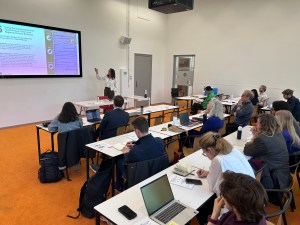
Our new book ‘Going Circular’ has been launched last week. We had a great debate on circular cities and regions at the launch event held at Faculty of Architecture and the Built Environment, TU Delft and online, touching upon the major challenges for circular policies and some controversial questions surrounding the topic.
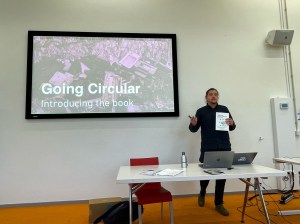
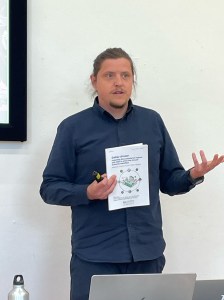
This concise and accessible book on the transitions towards circular economy from an urban and regional perspective was edited by Marcin Dąbrowski, Karel Van den Berghe, Joanna Williams and Ellen van Bueren. It includes contributions from leading researchers on circular economy and practitioners dealing with this issue in both public and private sectors. Federica Bono, Wendy Wuyts, Elmar Willems, and Alexander Wandl co-wrote chapters. These perspectives informed by research, were enriched by commentaries from practitioners of hashtag#CircularEconomy, including Małgorzata Grodzicka-Kowalczyk, Maciej Kowalczyk (PHENO HORIZON), Emil Evenhuis (PBL Planbureau voor de Leefomgeving), Pooran Desai (OnePlanet), Rusne Sileryte (geoFluxus), Joost van Faassen (City of Amsterdam). ‘Going Circular’ offers a fresh, spatial perspective on what circular economy means for cities and regions and how it could advance the sustainability agenda in a compact format and accessible language, supported by infrographics.
A book on the key challenges in driving urban and regional transitions towards circular economy
Here are the main messages of the book in a nutshell:
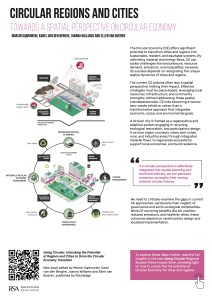
1. The Spatial Dimension: Circular economy strategies must address the spatial specificities of cities and regions, balancing resource flows while mitigating negative externalities.
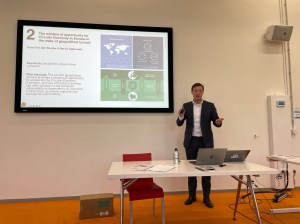
2. Geopolitical Opportunities: The geopolitcal crisis underscores the need for localised resource systems to enhance resilience and self-sufficiency, creating opportunities for promoting a localised circular economy.
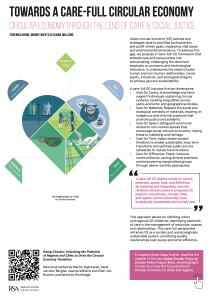
3. Social Inclusion: Circular economy policies should integrate equity and care lens, addressing socio-spatial disparities and ensuring socially just transitions.
4. Circular Bioeconomies: Metropolitan regions must adopt regenerative practices that link cities with ecosystems to restore urban and regional ecological health.
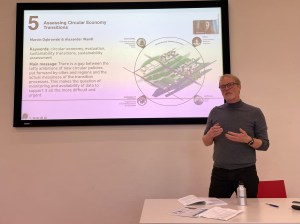
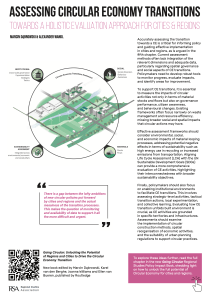
5. Assessment Tools: Robust metrics are needed to evaluate circular economy’s ecological, social, and economic impacts in an integrated way.
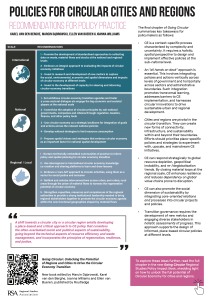
6. Implications for policy: Circular economy policies must be place-based and integrate principles of regeneration and justice across governance scales.
If that triggers your interest, have a look below at the 1-pager summaries of the book’s chapters with infographics visualising the main messages.


How to get the book?
Paper version of the book can be ordered here with a 20% discount in April 2025.
Digital version is available here, with the first and last chapters with free access.

 Marcin Dąbrowski