
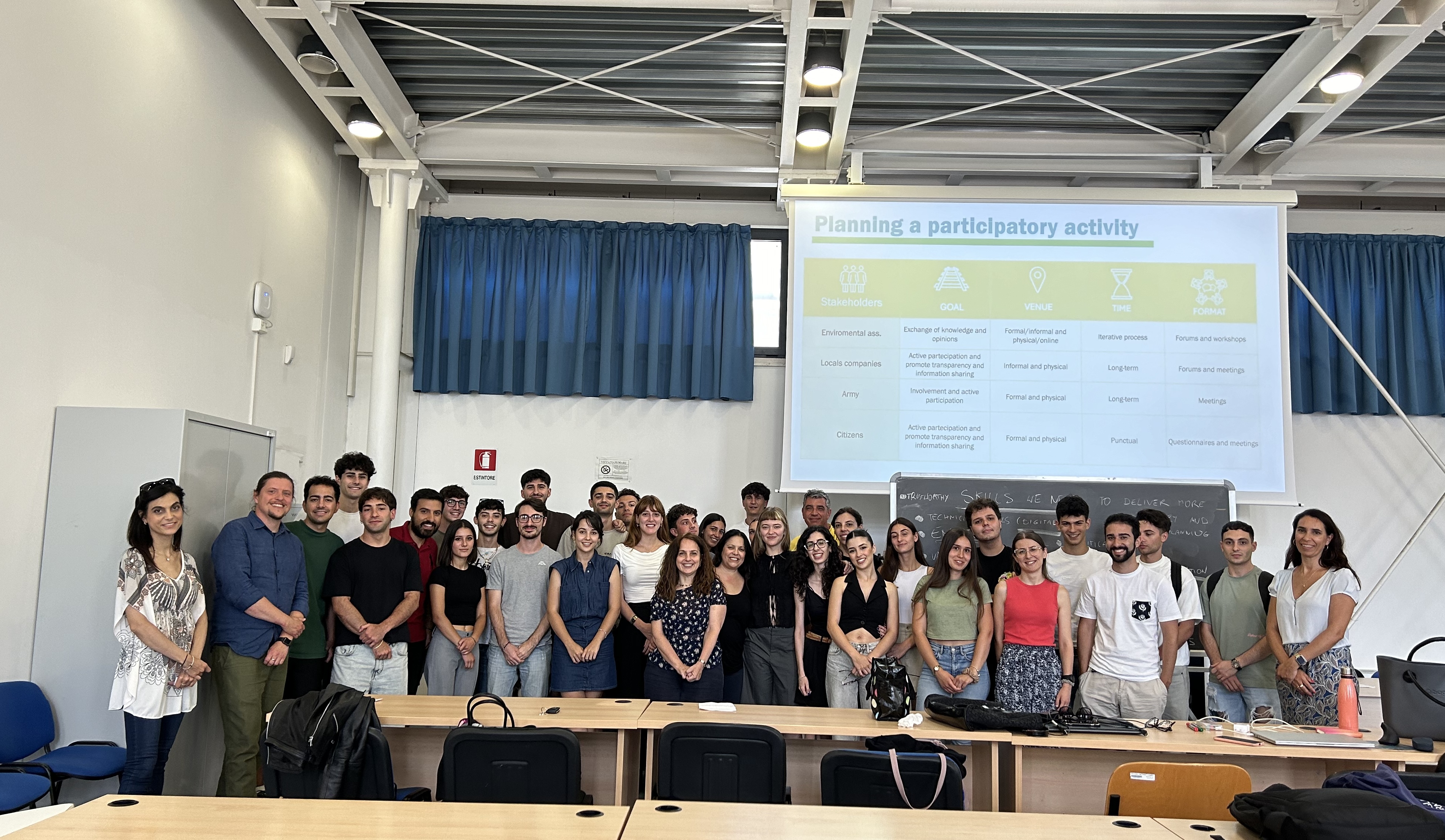

This summer I had the pleasure to teach a course at the University of Cagliari focusing on “Governance, participation and co-creation in spatial planning”. I was hosted at the Department of Civil and Environmental Engineering, and Architecture by Prof. Corrado Zoppi and Prof. Sabrina Lai. Together with them and also a group of local teachers, including Dr. Federica Leone, Dr. Federica Isola, Dr. Francesca Leccis.
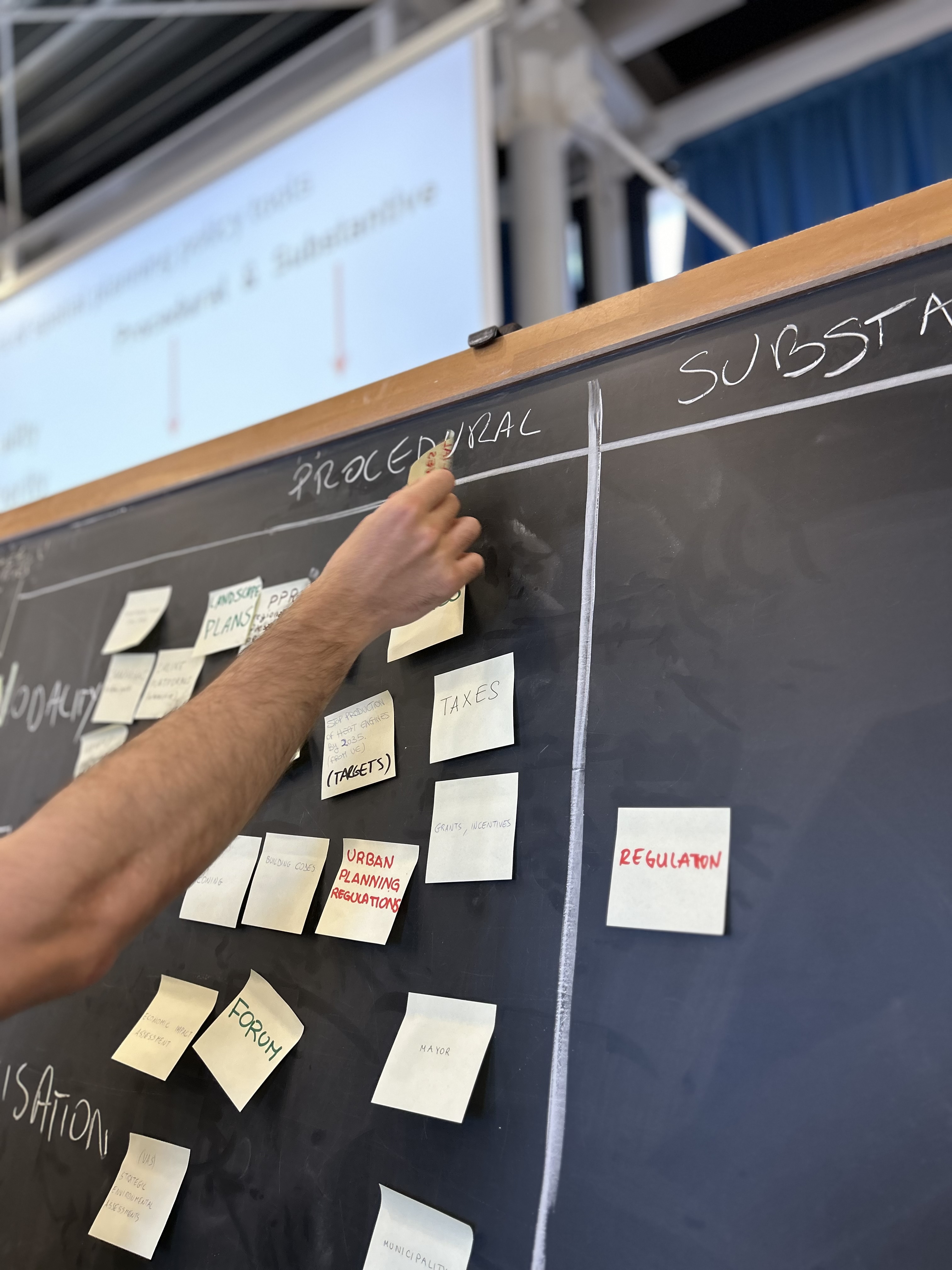
Through interactive lectures, discussion and debate in class, as well as a site visit (Marina Piccola in Cagliari was the case study used for the workshop) and practical, hands-on exercises related to governance, stakeholder analysis and designing stakeholder engagement strategies for urban and regional contexts, participants explored how participation and inclusion can help dealing with competing goals and agendas for cities and regions in spatial planning and urban design.
Thirty participants took part in the course. This diverse group included third-year students from the “Environmental and Territorial Engineering” bachelor’s course, Erasmus students from Spain, and two PhD students in Civil and Environmental Engineering / Sustainable Development and Climate Change. In addition, the course involved a number of planning practitioners: Salvatore Farci, head officer of the planning department of the Municipality of Cagliari, and Andrea Casciu and Sebastiano Gaias, took part in the workshops and guided us through the case study area – Marina Piccola on the Cagliari’s Eastern waterfront, while Isabella Ligia, head of the strategic planning office of the Metropolitan City of Cagliari (LabMet), provided the students with additional insights on engagement of stakeholders through living labs and feedback on the final presentations of the work done during the course.
Overall, I enjoyed this course a lot, not only because of the amazing location. The participation of the senior planning practitioners from Cagliari greatly improved the quality of discussions and provided valuable grounding of the course work in the ‘real world’ (situated learning) and the students showed a lot of interest in the workshops and delivered high-quality outputs. The course also allowed me to apply the Delft teaching methods and materials in a new urban context and with students from different disciplines than my usual audience at TU Delft, make new connections to scholars and practitioners in Cagliari and learn a lot from them about planning and stakeholder engagement in the Sardinian context. Seeds were sown for future research collaborations between University of Cagliari, the Metropolitan City of Cagliari, and Delft University of Technology around shared themes of interest (e.g. planning for sustainable regional and urban development, eco-system services and nature-based solutions). Finally, I cannot emphasise enough how friendly and welcoming my hosts and co-teachers at UNICA were. A truly fantastic experience!

 Marcin Dąbrowski